Buy projectnemesis.eu ?
We are moving the project
projectnemesis.eu .
Are you interested in purchasing the domain
projectnemesis.eu ?
domain@kv-gmbh.de · 0541-91531010
Buy projectnemesis.eu ?
What particles can be created from virtual particles?
Virtual particles can create a variety of particles, including photons, electrons, positrons, and quarks. These virtual particles can briefly exist as fluctuations in the quantum vacuum and can interact with each other to produce real particles. The creation of particles from virtual particles is a fundamental process in quantum field theory and is responsible for many phenomena in particle physics. **
Does hydrogen emit alpha particles or do alpha particles emit hydrogen?
Hydrogen does not emit alpha particles. Alpha particles are emitted by the decay of certain radioactive materials, such as uranium or radium. These alpha particles are made up of two protons and two neutrons, and they are emitted as the radioactive material undergoes decay. On the other hand, hydrogen is a chemical element that consists of one proton and one electron, and it does not emit alpha particles. **
Similar search terms for Particles
Top-Angebote
Products related to Particles:
-
Inspired Finds Natural Soy Wax For Candle Making 1KG Pure Granular DIY Scented Candle Craft Material particles 35.27 Oz (2.20 Lb)Bring your candle ideas to life with premium soy wax for candle making, a natural and beginner friendly raw material designed for DIY candle creators. Made from plant based soybean oil, this wax offers a smooth texture and reliable melt that makes...191,99 $*Shipping: 0,00 $Secure redirect to the provider
-
Neato Robotics D750 Robot Vacuum CleanerThis Exclusive Package additionally includes: 1x ultimate pet brush, 2x filters, 1x cleaning tool, 1 side brush. Pet hair, dust and allergens that linger in the home are first to go - the exclusive D-Shape design mimics corners of your home for a precise clean that round-shaped robotic vacuums simply can't do. Protect valuable decor, pet bowls or heavy messes by creating "no-go" lines through the app which work as virtual boundaries so that the automatic vacuum knows what objects or areas to avoid. Choose your clean - the Eco option gives a longer, quieter energy-saving clean while Turbo option provides a super-powered cleaning, with maximum hair pickup for a deeper clean. Even with 120 minutes of run time per charge, Charge Time: Up to 150 minutes, the smart vacuum cleaner always goes back to its base to recharge if needed and picks up directly where it left off until the job is done Neato Robotics customer service is available 24/7 on the following number : +44 20 33 18 29 95.406,99 £*Shipping: 0,00 £Secure redirect to the provider
-
York Wallcoverings Beige Robotics Peel and Stick WallpaperA simple drawing of robotic parts become line art in pattern Robotics. This Robotics Peel & Stick Wallpaper measures approximately 27 inches wide by 20 feet long, covering About 45 square feet per roll.59,50 $*Shipping: 0,00 $Secure redirect to the provider
-
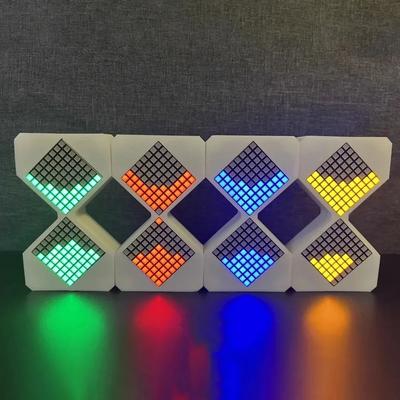
GlowBake DIY Digital Hourglass Birthday Gift Toy For Kids, Cyber Electronic Hourglass With Glow & Tech Style yellowElevate playtime and learning with our DIY Digital Hourglass Birthday Gift Toy a cyber electronic hourglass that merges modern tech style with timeless fun. Designed for kids and families, this electronic hourglass provides hours of educational...59,97 $*Shipping: 0,00 $Secure redirect to the provider



-
Why do beta particles have more energy than alpha particles, when alpha particles get stuck in paper and beta particles can penetrate 5 mm of aluminum?
Beta particles have more energy than alpha particles because they are smaller and lighter, allowing them to travel at higher speeds. This higher speed results in beta particles having more kinetic energy compared to alpha particles. Despite their higher energy, beta particles can still be stopped by a thinner barrier like aluminum because of their smaller size and lower mass, which allows them to penetrate materials that would stop larger, heavier alpha particles. **
-
Why do beta particles have more energy than alpha particles, if alpha particles get stuck in paper and beta particles can penetrate 5 mm of aluminum?
Beta particles have more energy than alpha particles because they have a smaller mass and higher velocity. This allows them to penetrate materials more easily, such as aluminum, compared to alpha particles. Alpha particles, on the other hand, have a larger mass and lower velocity, causing them to interact more strongly with matter and get stuck in materials like paper. Therefore, the higher energy of beta particles enables them to penetrate materials more effectively than alpha particles. **
-
What are water particles?
Water particles are the individual molecules of water, which are made up of two hydrogen atoms and one oxygen atom. These molecules are constantly moving and interacting with each other, forming the liquid state of water. At higher temperatures, the water molecules gain enough energy to break free from the liquid state and become water vapor, while at lower temperatures, they come together to form solid ice. Overall, water particles are the building blocks of water in its various states. **
-
Are smells real particles?
No, smells are not real particles. Smells are actually the result of the detection of certain molecules by our olfactory system. When certain molecules in the air come into contact with the receptors in our nose, they trigger a response that is interpreted by our brain as a specific smell. So, while smells are not particles themselves, they are the result of the interaction of molecules with our sensory system. **


What are adverbial particles?
Adverbial particles are words that are used to modify verbs, adjectives, or other adverbs. They are often used to indicate direction, location, or manner. In English, adverbial particles are commonly used in phrasal verbs, where they are combined with a verb to create a new meaning. For example, in the phrasal verb "look up," the adverbial particle "up" modifies the meaning of the verb "look." **
How do you differentiate particles?
Particles can be differentiated based on their size, shape, composition, and behavior. Techniques such as microscopy, spectroscopy, chromatography, and electrophoresis can be used to analyze and characterize particles. By examining these properties, scientists can distinguish between different types of particles and understand their unique characteristics and functions. **
Top-Angebote
Products related to Particles:
-
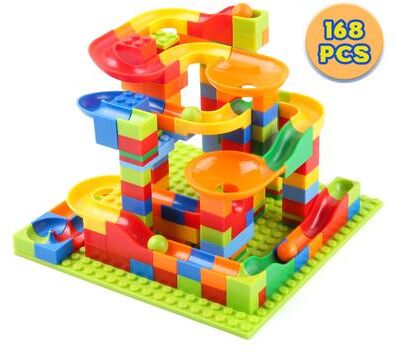
Inspire Daily Merch DIY Educational Toy Gift For Kids Small Block Assembly Slide Particles DIY Educational Toy Gift For Kids Small Block Assembly Slide ParticlesEncourage Learning with a Fun DIY Educational Toy Looking for the perfect educational gift for your child The Children's Slide Small Block Assembly Particles DIY Educational Toy Gift is an engaging and creative toy that promotes learning while...39,97 $*Shipping: 0,00 $Secure redirect to the provider
-
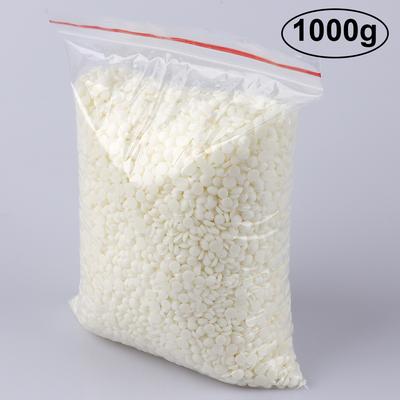
Quick Pick Pro Natural Soy Wax Granules, 1KG Candle Making Supplies, Scented Raw Material, 100% No Additives For DIY particles 1000gIgnite your creativity and fill your home with the pure, comforting glow of a candle you made yourself. Our 1KG bag of Natural Soy Wax Granular is the perfect foundation for your handmade masterpieces. As a premium candle raw material, it is...99,97 $*Shipping: 0,00 $Secure redirect to the provider
-
Inspired Finds Natural Soy Wax For Candle Making 1KG Pure Granular DIY Scented Candle Craft Material particles 35.27 Oz (2.20 Lb)Bring your candle ideas to life with premium soy wax for candle making, a natural and beginner friendly raw material designed for DIY candle creators. Made from plant based soybean oil, this wax offers a smooth texture and reliable melt that makes...191,99 $*Shipping: 0,00 $Secure redirect to the provider
-
Neato Robotics D750 Robot Vacuum CleanerThis Exclusive Package additionally includes: 1x ultimate pet brush, 2x filters, 1x cleaning tool, 1 side brush. Pet hair, dust and allergens that linger in the home are first to go - the exclusive D-Shape design mimics corners of your home for a precise clean that round-shaped robotic vacuums simply can't do. Protect valuable decor, pet bowls or heavy messes by creating "no-go" lines through the app which work as virtual boundaries so that the automatic vacuum knows what objects or areas to avoid. Choose your clean - the Eco option gives a longer, quieter energy-saving clean while Turbo option provides a super-powered cleaning, with maximum hair pickup for a deeper clean. Even with 120 minutes of run time per charge, Charge Time: Up to 150 minutes, the smart vacuum cleaner always goes back to its base to recharge if needed and picks up directly where it left off until the job is done Neato Robotics customer service is available 24/7 on the following number : +44 20 33 18 29 95.406,99 £*Shipping: 0,00 £Secure redirect to the provider
-
What particles can be created from virtual particles?
Virtual particles can create a variety of particles, including photons, electrons, positrons, and quarks. These virtual particles can briefly exist as fluctuations in the quantum vacuum and can interact with each other to produce real particles. The creation of particles from virtual particles is a fundamental process in quantum field theory and is responsible for many phenomena in particle physics. **
-
Does hydrogen emit alpha particles or do alpha particles emit hydrogen?
Hydrogen does not emit alpha particles. Alpha particles are emitted by the decay of certain radioactive materials, such as uranium or radium. These alpha particles are made up of two protons and two neutrons, and they are emitted as the radioactive material undergoes decay. On the other hand, hydrogen is a chemical element that consists of one proton and one electron, and it does not emit alpha particles. **
-
Why do beta particles have more energy than alpha particles, when alpha particles get stuck in paper and beta particles can penetrate 5 mm of aluminum?
Beta particles have more energy than alpha particles because they are smaller and lighter, allowing them to travel at higher speeds. This higher speed results in beta particles having more kinetic energy compared to alpha particles. Despite their higher energy, beta particles can still be stopped by a thinner barrier like aluminum because of their smaller size and lower mass, which allows them to penetrate materials that would stop larger, heavier alpha particles. **
-
Why do beta particles have more energy than alpha particles, if alpha particles get stuck in paper and beta particles can penetrate 5 mm of aluminum?
Beta particles have more energy than alpha particles because they have a smaller mass and higher velocity. This allows them to penetrate materials more easily, such as aluminum, compared to alpha particles. Alpha particles, on the other hand, have a larger mass and lower velocity, causing them to interact more strongly with matter and get stuck in materials like paper. Therefore, the higher energy of beta particles enables them to penetrate materials more effectively than alpha particles. **
Similar search terms for Particles
-
York Wallcoverings Beige Robotics Peel and Stick WallpaperA simple drawing of robotic parts become line art in pattern Robotics. This Robotics Peel & Stick Wallpaper measures approximately 27 inches wide by 20 feet long, covering About 45 square feet per roll.59,50 $*Shipping: 0,00 $Secure redirect to the provider
-
GlowBake DIY Digital Hourglass Birthday Gift Toy For Kids, Cyber Electronic Hourglass With Glow & Tech Style yellowElevate playtime and learning with our DIY Digital Hourglass Birthday Gift Toy a cyber electronic hourglass that merges modern tech style with timeless fun. Designed for kids and families, this electronic hourglass provides hours of educational...59,97 $*Shipping: 0,00 $Secure redirect to the provider
-
Inspired Finds Natural Soy Wax For Candle Making 1KG Pure Granular DIY Scented Candle Craft Material particles 17.64 Oz (1.10 Lb)Bring your candle ideas to life with premium soy wax for candle making, a natural and beginner friendly raw material designed for DIY candle creators. Made from plant based soybean oil, this wax offers a smooth texture and reliable melt that makes...104,99 $*Shipping: 0,00 $Secure redirect to the provider
-
York Wallcoverings Grey Robotics Peel and Stick WallpaperA simple drawing of robotic parts become line art in pattern Robotics. This Robotics Peel & Stick Wallpaper measures approximately 27 inches wide by 20 feet long, covering About 45 square feet per roll.53,99 $*Shipping: 0,00 $Secure redirect to the provider
-
What are water particles?
Water particles are the individual molecules of water, which are made up of two hydrogen atoms and one oxygen atom. These molecules are constantly moving and interacting with each other, forming the liquid state of water. At higher temperatures, the water molecules gain enough energy to break free from the liquid state and become water vapor, while at lower temperatures, they come together to form solid ice. Overall, water particles are the building blocks of water in its various states. **
-
Are smells real particles?
No, smells are not real particles. Smells are actually the result of the detection of certain molecules by our olfactory system. When certain molecules in the air come into contact with the receptors in our nose, they trigger a response that is interpreted by our brain as a specific smell. So, while smells are not particles themselves, they are the result of the interaction of molecules with our sensory system. **
-
What are adverbial particles?
Adverbial particles are words that are used to modify verbs, adjectives, or other adverbs. They are often used to indicate direction, location, or manner. In English, adverbial particles are commonly used in phrasal verbs, where they are combined with a verb to create a new meaning. For example, in the phrasal verb "look up," the adverbial particle "up" modifies the meaning of the verb "look." **
-
How do you differentiate particles?
Particles can be differentiated based on their size, shape, composition, and behavior. Techniques such as microscopy, spectroscopy, chromatography, and electrophoresis can be used to analyze and characterize particles. By examining these properties, scientists can distinguish between different types of particles and understand their unique characteristics and functions. **
* All prices are inclusive of VAT and, if applicable, plus shipping costs. The offer information is based on the details provided by the respective shop and is updated through automated processes. Real-time updates do not occur, so deviations can occur in individual cases. ** Note: Parts of this content were created by AI.