Buy projectnemesis.eu ?
We are moving the project
projectnemesis.eu .
Are you interested in purchasing the domain
projectnemesis.eu ?
domain@kv-gmbh.de · 0541-91531010
Buy projectnemesis.eu ?
What is a finite automaton?
A finite automaton is a mathematical model used to represent a system that processes input and transitions between different states based on that input. It consists of a set of states, a set of input symbols, a transition function that specifies how the automaton moves from one state to another based on the input, a start state, and a set of accepting states. Finite automata are used in computer science and theoretical computer science to model and analyze the behavior of systems that can be in a finite number of states and transition between them based on input. They are used in various applications such as lexical analysis in compilers, pattern matching in text processing, and modeling of digital circuits. **
How do you create a deterministic finite automaton from a non-deterministic pushdown automaton?
To create a deterministic finite automaton (DFA) from a non-deterministic pushdown automaton (PDA), we can use the subset construction method. This involves creating a state in the DFA for each possible combination of states in the PDA. The transitions in the DFA are determined by simulating the behavior of the PDA on each input symbol. If the PDA can be in multiple states at a given time, the DFA will have a state for each combination of those states. The final states of the DFA are determined by whether any of the PDA's possible states are final states. This process results in a deterministic finite automaton that simulates the behavior of the original non-deterministic pushdown automaton. **


Similar search terms for Automaton
Top-Angebote
Products related to Automaton:
-
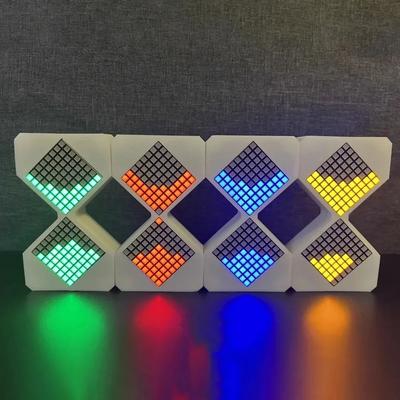
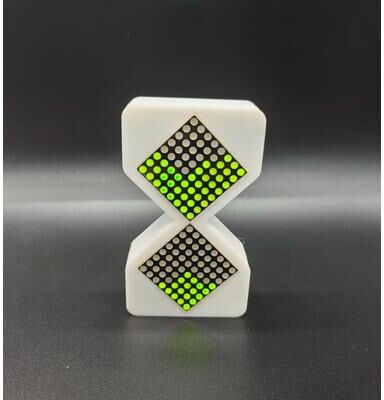
GlowBake DIY Digital Hourglass Birthday Gift Toy For Kids, Cyber Electronic Hourglass With Glow & Tech Style blueElevate playtime and learning with our DIY Digital Hourglass Birthday Gift Toy a cyber electronic hourglass that merges modern tech style with timeless fun. Designed for kids and families, this electronic hourglass provides hours of educational...59,97 $*Shipping: 0,00 $Secure redirect to the provider
-
Sesderma Reti Age 5 Liposomal Serum Anti-Aging Innovation 30mLA facial serum for wrinkles and signs of ageing. Reduces wrinkles and fine lines. Hydrates and strengthens barrier. Restores youthful radiance. 5-Retinoid System: smooths wrinkles, accelerates renewal, and boosts collagen. Biomimetic Peptides: fill expression lines by stimulating collagen synthesis.54,51 £*Shipping: 5,34 £Secure redirect to the provider
-
Inspire Daily Merch Robotime The Last City Cyberpunk 3D Puzzle Model Futuristic Marble Run Gaming Decoration Gift For Men Automatic hip Hop StreetRobotime Rokr The Last City Futuristic Marble Run 3D Puzzle Model The Robotime Rokr The Last City is an extraordinary futuristic marble run designed for those who appreciate intricate 3D puzzle models. This unique gaming decoration is perfect for...299,97 $*Shipping: 0,00 $Secure redirect to the provider
-
York Wallcoverings Grey Robotics Peel and Stick WallpaperA simple drawing of robotic parts become line art in pattern Robotics. This Robotics Peel & Stick Wallpaper measures approximately 27 inches wide by 20 feet long, covering About 45 square feet per roll.53,99 $*Shipping: 0,00 $Secure redirect to the provider



-
How do you enter the state transition diagram of an automaton into an automaton table?
To enter the state transition diagram of an automaton into an automaton table, you first list all the states of the automaton as rows in the table. Then, list all the input symbols as columns in the table. For each state and input symbol pair, fill in the corresponding cell with the next state that the automaton transitions to. Repeat this process for all state and input symbol pairs until the entire transition diagram is represented in the automaton table. **
-
How do you transfer the state transition diagram of an automaton into an automaton table?
To transfer the state transition diagram of an automaton into an automaton table, you need to list all the states of the automaton as rows in the table. Then, list all the input symbols as columns in the table. Fill in the table with the corresponding next state for each combination of current state and input symbol based on the transitions in the state transition diagram. Finally, indicate the initial state and any final states in the table. This table can then be used to simulate the behavior of the automaton for different input sequences. **
-
How does a deterministic finite automaton (DFA) work?
A deterministic finite automaton (DFA) is a mathematical model used to recognize patterns in strings of symbols. It consists of a finite set of states, a finite set of input symbols, a transition function that maps a state and an input symbol to another state, a start state, and a set of accepting states. The DFA starts in the start state and reads input symbols one at a time, transitioning between states according to the transition function. Once the input is fully processed, the DFA is in a final state, and if that state is an accepting state, the input is accepted; otherwise, it is rejected. DFAs are used in various applications, such as lexical analysis in compilers and pattern matching in text processing. **
-
How does a non-deterministic finite automaton work?
A non-deterministic finite automaton (NFA) is a theoretical model of computation that consists of a set of states, a set of input symbols, a transition function, an initial state, and a set of accepting states. Unlike a deterministic finite automaton (DFA), an NFA can have multiple possible transitions from a given state on a given input symbol. When processing input, an NFA can be in multiple states simultaneously and can transition to multiple states at once. It accepts a given input string if there exists at least one path through the states that leads to an accepting state. NFAs are often used in theoretical computer science to model certain types of computations and are a key concept in the theory of formal languages and automata. **

What is a deterministic finite automaton in computer science?
A deterministic finite automaton (DFA) is a type of finite state machine in computer science. It consists of a set of states, a set of input symbols, a transition function that maps states and input symbols to other states, a start state, and a set of accepting states. DFAs are used to recognize patterns in input strings by transitioning between states based on the input symbols. They are simpler than nondeterministic finite automata (NFAs) as they have a unique transition for each input symbol in each state. **
What is a cellar automaton in theoretical computer science?
A cellar automaton is a type of cellular automaton in theoretical computer science. Cellular automata are discrete models studied in computer science and mathematics, consisting of a grid of cells, each of which can be in a finite number of states. The state of each cell evolves over time according to a set of rules based on the states of neighboring cells. In a cellar automaton, the grid is arranged in a three-dimensional lattice, and the state of each cell is updated based on the states of its six neighboring cells. Cellar automata are used to study complex systems and emergent behavior in various fields, including physics, biology, and computer science. **
Top-Angebote
Products related to Automaton:
-
Neato Robotics D750 Robot Vacuum CleanerThis Exclusive Package additionally includes: 1x ultimate pet brush, 2x filters, 1x cleaning tool, 1 side brush. Pet hair, dust and allergens that linger in the home are first to go - the exclusive D-Shape design mimics corners of your home for a precise clean that round-shaped robotic vacuums simply can't do. Protect valuable decor, pet bowls or heavy messes by creating "no-go" lines through the app which work as virtual boundaries so that the automatic vacuum knows what objects or areas to avoid. Choose your clean - the Eco option gives a longer, quieter energy-saving clean while Turbo option provides a super-powered cleaning, with maximum hair pickup for a deeper clean. Even with 120 minutes of run time per charge, Charge Time: Up to 150 minutes, the smart vacuum cleaner always goes back to its base to recharge if needed and picks up directly where it left off until the job is done Neato Robotics customer service is available 24/7 on the following number : +44 20 33 18 29 95.406,99 £*Shipping: 0,00 £Secure redirect to the provider
-
York Wallcoverings Beige Robotics Peel and Stick WallpaperA simple drawing of robotic parts become line art in pattern Robotics. This Robotics Peel & Stick Wallpaper measures approximately 27 inches wide by 20 feet long, covering About 45 square feet per roll.59,50 $*Shipping: 0,00 $Secure redirect to the provider
-
GlowBake DIY Digital Hourglass Birthday Gift Toy For Kids, Cyber Electronic Hourglass With Glow & Tech Style blueElevate playtime and learning with our DIY Digital Hourglass Birthday Gift Toy a cyber electronic hourglass that merges modern tech style with timeless fun. Designed for kids and families, this electronic hourglass provides hours of educational...59,97 $*Shipping: 0,00 $Secure redirect to the provider
-
Sesderma Reti Age 5 Liposomal Serum Anti-Aging Innovation 30mLA facial serum for wrinkles and signs of ageing. Reduces wrinkles and fine lines. Hydrates and strengthens barrier. Restores youthful radiance. 5-Retinoid System: smooths wrinkles, accelerates renewal, and boosts collagen. Biomimetic Peptides: fill expression lines by stimulating collagen synthesis.54,51 £*Shipping: 5,34 £Secure redirect to the provider
-
What is a finite automaton?
A finite automaton is a mathematical model used to represent a system that processes input and transitions between different states based on that input. It consists of a set of states, a set of input symbols, a transition function that specifies how the automaton moves from one state to another based on the input, a start state, and a set of accepting states. Finite automata are used in computer science and theoretical computer science to model and analyze the behavior of systems that can be in a finite number of states and transition between them based on input. They are used in various applications such as lexical analysis in compilers, pattern matching in text processing, and modeling of digital circuits. **
-
How do you create a deterministic finite automaton from a non-deterministic pushdown automaton?
To create a deterministic finite automaton (DFA) from a non-deterministic pushdown automaton (PDA), we can use the subset construction method. This involves creating a state in the DFA for each possible combination of states in the PDA. The transitions in the DFA are determined by simulating the behavior of the PDA on each input symbol. If the PDA can be in multiple states at a given time, the DFA will have a state for each combination of those states. The final states of the DFA are determined by whether any of the PDA's possible states are final states. This process results in a deterministic finite automaton that simulates the behavior of the original non-deterministic pushdown automaton. **
-
How do you enter the state transition diagram of an automaton into an automaton table?
To enter the state transition diagram of an automaton into an automaton table, you first list all the states of the automaton as rows in the table. Then, list all the input symbols as columns in the table. For each state and input symbol pair, fill in the corresponding cell with the next state that the automaton transitions to. Repeat this process for all state and input symbol pairs until the entire transition diagram is represented in the automaton table. **
-
How do you transfer the state transition diagram of an automaton into an automaton table?
To transfer the state transition diagram of an automaton into an automaton table, you need to list all the states of the automaton as rows in the table. Then, list all the input symbols as columns in the table. Fill in the table with the corresponding next state for each combination of current state and input symbol based on the transitions in the state transition diagram. Finally, indicate the initial state and any final states in the table. This table can then be used to simulate the behavior of the automaton for different input sequences. **
Similar search terms for Automaton
-
Inspire Daily Merch Robotime The Last City Cyberpunk 3D Puzzle Model Futuristic Marble Run Gaming Decoration Gift For Men Automatic hip Hop StreetRobotime Rokr The Last City Futuristic Marble Run 3D Puzzle Model The Robotime Rokr The Last City is an extraordinary futuristic marble run designed for those who appreciate intricate 3D puzzle models. This unique gaming decoration is perfect for...299,97 $*Shipping: 0,00 $Secure redirect to the provider
-
York Wallcoverings Grey Robotics Peel and Stick WallpaperA simple drawing of robotic parts become line art in pattern Robotics. This Robotics Peel & Stick Wallpaper measures approximately 27 inches wide by 20 feet long, covering About 45 square feet per roll.53,99 $*Shipping: 0,00 $Secure redirect to the provider
-
GlowBake DIY Digital Hourglass Birthday Gift Toy For Kids, Cyber Electronic Hourglass With Glow & Tech Style greenElevate playtime and learning with our DIY Digital Hourglass Birthday Gift Toy a cyber electronic hourglass that merges modern tech style with timeless fun. Designed for kids and families, this electronic hourglass provides hours of educational...59,97 $*Shipping: 0,00 $Secure redirect to the provider
-
GlowBake DIY Digital Hourglass Birthday Gift Toy For Kids, Cyber Electronic Hourglass With Glow & Tech Style redElevate playtime and learning with our DIY Digital Hourglass Birthday Gift Toy a cyber electronic hourglass that merges modern tech style with timeless fun. Designed for kids and families, this electronic hourglass provides hours of educational...59,97 $*Shipping: 0,00 $Secure redirect to the provider
-
How does a deterministic finite automaton (DFA) work?
A deterministic finite automaton (DFA) is a mathematical model used to recognize patterns in strings of symbols. It consists of a finite set of states, a finite set of input symbols, a transition function that maps a state and an input symbol to another state, a start state, and a set of accepting states. The DFA starts in the start state and reads input symbols one at a time, transitioning between states according to the transition function. Once the input is fully processed, the DFA is in a final state, and if that state is an accepting state, the input is accepted; otherwise, it is rejected. DFAs are used in various applications, such as lexical analysis in compilers and pattern matching in text processing. **
-
How does a non-deterministic finite automaton work?
A non-deterministic finite automaton (NFA) is a theoretical model of computation that consists of a set of states, a set of input symbols, a transition function, an initial state, and a set of accepting states. Unlike a deterministic finite automaton (DFA), an NFA can have multiple possible transitions from a given state on a given input symbol. When processing input, an NFA can be in multiple states simultaneously and can transition to multiple states at once. It accepts a given input string if there exists at least one path through the states that leads to an accepting state. NFAs are often used in theoretical computer science to model certain types of computations and are a key concept in the theory of formal languages and automata. **
-
What is a deterministic finite automaton in computer science?
A deterministic finite automaton (DFA) is a type of finite state machine in computer science. It consists of a set of states, a set of input symbols, a transition function that maps states and input symbols to other states, a start state, and a set of accepting states. DFAs are used to recognize patterns in input strings by transitioning between states based on the input symbols. They are simpler than nondeterministic finite automata (NFAs) as they have a unique transition for each input symbol in each state. **
-
What is a cellar automaton in theoretical computer science?
A cellar automaton is a type of cellular automaton in theoretical computer science. Cellular automata are discrete models studied in computer science and mathematics, consisting of a grid of cells, each of which can be in a finite number of states. The state of each cell evolves over time according to a set of rules based on the states of neighboring cells. In a cellar automaton, the grid is arranged in a three-dimensional lattice, and the state of each cell is updated based on the states of its six neighboring cells. Cellar automata are used to study complex systems and emergent behavior in various fields, including physics, biology, and computer science. **
* All prices are inclusive of VAT and, if applicable, plus shipping costs. The offer information is based on the details provided by the respective shop and is updated through automated processes. Real-time updates do not occur, so deviations can occur in individual cases. ** Note: Parts of this content were created by AI.