Buy projectnemesis.eu ?
We are moving the project
projectnemesis.eu .
Are you interested in purchasing the domain
projectnemesis.eu ?
domain@kv-gmbh.de · 0541-91531010
Buy projectnemesis.eu ?
When do you conjugate "avoir"?
The verb "avoir" is conjugated when talking about possession or to form compound tenses such as the passé composé. In these cases, "avoir" is conjugated according to the subject of the sentence. For example, "J'ai un chat" (I have a cat) or "Nous avons mangé" (We have eaten). **
How do you conjugate falloir?
The verb "falloir" is an impersonal verb, meaning it is only used in the third person singular. It is conjugated as "il faut" in the present tense, "il fallait" in the imperfect tense, and "il faudra" in the future tense. There is no need to conjugate it for different subjects, as it always remains in the third person singular form. **


Similar search terms for Conjugate
Top-Angebote
Products related to Conjugate:
-
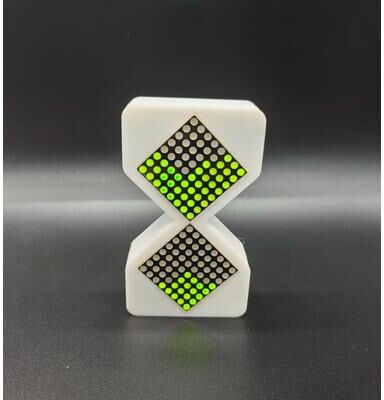
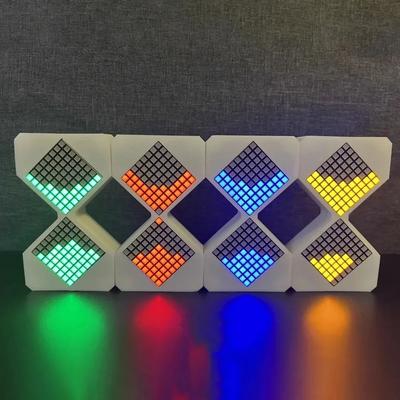
GlowBake DIY Digital Hourglass Birthday Gift Toy For Kids, Cyber Electronic Hourglass With Glow & Tech Style yellowElevate playtime and learning with our DIY Digital Hourglass Birthday Gift Toy a cyber electronic hourglass that merges modern tech style with timeless fun. Designed for kids and families, this electronic hourglass provides hours of educational...59,97 $*Shipping: 0,00 $Secure redirect to the provider
-
Inspire Daily Merch Robotime The Last City Cyberpunk 3D Puzzle Model Futuristic Marble Run Gaming Decoration Gift For Men Automatic the Future CityRobotime Rokr The Last City Futuristic Marble Run 3D Puzzle Model The Robotime Rokr The Last City is an extraordinary futuristic marble run designed for those who appreciate intricate 3D puzzle models. This unique gaming decoration is perfect for...299,97 $*Shipping: 0,00 $Secure redirect to the provider
-
York Wallcoverings Grey Robotics Peel and Stick WallpaperA simple drawing of robotic parts become line art in pattern Robotics. This Robotics Peel & Stick Wallpaper measures approximately 27 inches wide by 20 feet long, covering About 45 square feet per roll.53,99 $*Shipping: 0,00 $Secure redirect to the provider
-
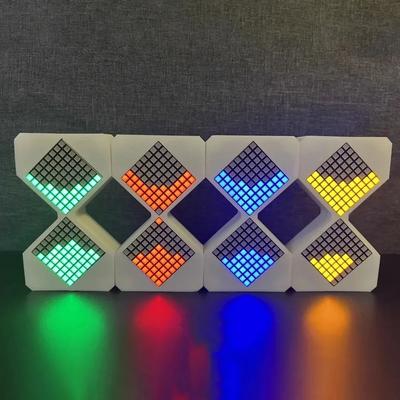
GlowBake DIY Digital Hourglass Birthday Gift Toy For Kids, Cyber Electronic Hourglass With Glow & Tech Style redElevate playtime and learning with our DIY Digital Hourglass Birthday Gift Toy a cyber electronic hourglass that merges modern tech style with timeless fun. Designed for kids and families, this electronic hourglass provides hours of educational...59,97 $*Shipping: 0,00 $Secure redirect to the provider



-
How do you conjugate in Hebrew?
In Hebrew, verbs are conjugated based on the subject of the sentence and the tense of the action. There are different conjugation patterns for each tense (past, present, future) and for each subject (I, you, he/she/it, we, you all, they). The verb root remains the same, but the conjugation changes to match the subject and tense. Additionally, Hebrew verbs also change based on gender and number of the subject. Learning the conjugation patterns and practicing with different verbs is essential for mastering Hebrew verb conjugation. **
-
How do you conjugate French adjectives?
In French, adjectives must agree in gender (masculine or feminine) and number (singular or plural) with the noun they modify. To conjugate a French adjective, you need to add the appropriate ending to match the gender and number of the noun it describes. For example, to make the adjective "petit" (small) agree with a masculine singular noun, you would use "petit." But if the noun is feminine singular, you would use "petite." And for a masculine plural noun, you would use "petits," and for a feminine plural noun, you would use "petites." **
-
Can you help me conjugate avoir?
Sure! The verb "avoir" is conjugated as follows: - J'ai (I have) - Tu as (You have) - Il/Elle/On a (He/She/One has) - Nous avons (We have) - Vous avez (You have) - Ils/Elles ont (They have) **
-
How do you conjugate in French?
In French, verbs are conjugated to match the subject of the sentence, including the person (I, you, he/she, we, they) and the tense (present, past, future, etc.). To conjugate a regular verb in the present tense, you remove the infinitive ending (-er, -ir, -re) and add the appropriate ending for the subject (je, tu, il/elle, nous, vous, ils/elles). For example, for the verb "parler" (to speak), you would conjugate it as "je parle" (I speak), "tu parles" (you speak), "il/elle parle" (he/she speaks), "nous parlons" (we speak), "vous parlez" (you speak), "ils/elles parlent" (they speak). Irregular verbs have their own unique conjugation patterns that need to be memorized. **
How do you conjugate something life-threatening?
When conjugating something life-threatening, it is important to use appropriate language and tone to convey the seriousness of the situation. This can involve using strong verbs and descriptive language to emphasize the severity of the threat. It is also important to provide clear and concise information about the potential risks and consequences associated with the life-threatening situation. Additionally, it is crucial to offer guidance on how to address or mitigate the threat to ensure the safety and well-being of those involved. **
How do you conjugate the verb "essayer"?
To conjugate the verb "essayer" in French, you would follow the regular -er verb conjugation pattern. For example: - Je essaie (I try) - Tu essaies (You try) - Il/Elle essaie (He/She tries) - Nous essayons (We try) - Vous essayez (You try) - Ils/Elles essaient (They try) **
Top-Angebote
Products related to Conjugate:
-
Neato Robotics D750 Robot Vacuum CleanerThis Exclusive Package additionally includes: 1x ultimate pet brush, 2x filters, 1x cleaning tool, 1 side brush. Pet hair, dust and allergens that linger in the home are first to go - the exclusive D-Shape design mimics corners of your home for a precise clean that round-shaped robotic vacuums simply can't do. Protect valuable decor, pet bowls or heavy messes by creating "no-go" lines through the app which work as virtual boundaries so that the automatic vacuum knows what objects or areas to avoid. Choose your clean - the Eco option gives a longer, quieter energy-saving clean while Turbo option provides a super-powered cleaning, with maximum hair pickup for a deeper clean. Even with 120 minutes of run time per charge, Charge Time: Up to 150 minutes, the smart vacuum cleaner always goes back to its base to recharge if needed and picks up directly where it left off until the job is done Neato Robotics customer service is available 24/7 on the following number : +44 20 33 18 29 95.406,99 £*Shipping: 0,00 £Secure redirect to the provider
-
York Wallcoverings Beige Robotics Peel and Stick WallpaperA simple drawing of robotic parts become line art in pattern Robotics. This Robotics Peel & Stick Wallpaper measures approximately 27 inches wide by 20 feet long, covering About 45 square feet per roll.59,50 $*Shipping: 0,00 $Secure redirect to the provider
-
GlowBake DIY Digital Hourglass Birthday Gift Toy For Kids, Cyber Electronic Hourglass With Glow & Tech Style yellowElevate playtime and learning with our DIY Digital Hourglass Birthday Gift Toy a cyber electronic hourglass that merges modern tech style with timeless fun. Designed for kids and families, this electronic hourglass provides hours of educational...59,97 $*Shipping: 0,00 $Secure redirect to the provider
-
Inspire Daily Merch Robotime The Last City Cyberpunk 3D Puzzle Model Futuristic Marble Run Gaming Decoration Gift For Men Automatic the Future CityRobotime Rokr The Last City Futuristic Marble Run 3D Puzzle Model The Robotime Rokr The Last City is an extraordinary futuristic marble run designed for those who appreciate intricate 3D puzzle models. This unique gaming decoration is perfect for...299,97 $*Shipping: 0,00 $Secure redirect to the provider
-
When do you conjugate "avoir"?
The verb "avoir" is conjugated when talking about possession or to form compound tenses such as the passé composé. In these cases, "avoir" is conjugated according to the subject of the sentence. For example, "J'ai un chat" (I have a cat) or "Nous avons mangé" (We have eaten). **
-
How do you conjugate falloir?
The verb "falloir" is an impersonal verb, meaning it is only used in the third person singular. It is conjugated as "il faut" in the present tense, "il fallait" in the imperfect tense, and "il faudra" in the future tense. There is no need to conjugate it for different subjects, as it always remains in the third person singular form. **
-
How do you conjugate in Hebrew?
In Hebrew, verbs are conjugated based on the subject of the sentence and the tense of the action. There are different conjugation patterns for each tense (past, present, future) and for each subject (I, you, he/she/it, we, you all, they). The verb root remains the same, but the conjugation changes to match the subject and tense. Additionally, Hebrew verbs also change based on gender and number of the subject. Learning the conjugation patterns and practicing with different verbs is essential for mastering Hebrew verb conjugation. **
-
How do you conjugate French adjectives?
In French, adjectives must agree in gender (masculine or feminine) and number (singular or plural) with the noun they modify. To conjugate a French adjective, you need to add the appropriate ending to match the gender and number of the noun it describes. For example, to make the adjective "petit" (small) agree with a masculine singular noun, you would use "petit." But if the noun is feminine singular, you would use "petite." And for a masculine plural noun, you would use "petits," and for a feminine plural noun, you would use "petites." **
Similar search terms for Conjugate
-
York Wallcoverings Grey Robotics Peel and Stick WallpaperA simple drawing of robotic parts become line art in pattern Robotics. This Robotics Peel & Stick Wallpaper measures approximately 27 inches wide by 20 feet long, covering About 45 square feet per roll.53,99 $*Shipping: 0,00 $Secure redirect to the provider
-
GlowBake DIY Digital Hourglass Birthday Gift Toy For Kids, Cyber Electronic Hourglass With Glow & Tech Style redElevate playtime and learning with our DIY Digital Hourglass Birthday Gift Toy a cyber electronic hourglass that merges modern tech style with timeless fun. Designed for kids and families, this electronic hourglass provides hours of educational...59,97 $*Shipping: 0,00 $Secure redirect to the provider
-
GlowBake DIY Digital Hourglass Birthday Gift Toy For Kids, Cyber Electronic Hourglass With Glow & Tech Style greenElevate playtime and learning with our DIY Digital Hourglass Birthday Gift Toy a cyber electronic hourglass that merges modern tech style with timeless fun. Designed for kids and families, this electronic hourglass provides hours of educational...59,97 $*Shipping: 0,00 $Secure redirect to the provider
-
GlowBake DIY Digital Hourglass Birthday Gift Toy For Kids, Cyber Electronic Hourglass With Glow & Tech Style blueElevate playtime and learning with our DIY Digital Hourglass Birthday Gift Toy a cyber electronic hourglass that merges modern tech style with timeless fun. Designed for kids and families, this electronic hourglass provides hours of educational...59,97 $*Shipping: 0,00 $Secure redirect to the provider
-
Can you help me conjugate avoir?
Sure! The verb "avoir" is conjugated as follows: - J'ai (I have) - Tu as (You have) - Il/Elle/On a (He/She/One has) - Nous avons (We have) - Vous avez (You have) - Ils/Elles ont (They have) **
-
How do you conjugate in French?
In French, verbs are conjugated to match the subject of the sentence, including the person (I, you, he/she, we, they) and the tense (present, past, future, etc.). To conjugate a regular verb in the present tense, you remove the infinitive ending (-er, -ir, -re) and add the appropriate ending for the subject (je, tu, il/elle, nous, vous, ils/elles). For example, for the verb "parler" (to speak), you would conjugate it as "je parle" (I speak), "tu parles" (you speak), "il/elle parle" (he/she speaks), "nous parlons" (we speak), "vous parlez" (you speak), "ils/elles parlent" (they speak). Irregular verbs have their own unique conjugation patterns that need to be memorized. **
-
How do you conjugate something life-threatening?
When conjugating something life-threatening, it is important to use appropriate language and tone to convey the seriousness of the situation. This can involve using strong verbs and descriptive language to emphasize the severity of the threat. It is also important to provide clear and concise information about the potential risks and consequences associated with the life-threatening situation. Additionally, it is crucial to offer guidance on how to address or mitigate the threat to ensure the safety and well-being of those involved. **
-
How do you conjugate the verb "essayer"?
To conjugate the verb "essayer" in French, you would follow the regular -er verb conjugation pattern. For example: - Je essaie (I try) - Tu essaies (You try) - Il/Elle essaie (He/She tries) - Nous essayons (We try) - Vous essayez (You try) - Ils/Elles essaient (They try) **
* All prices are inclusive of VAT and, if applicable, plus shipping costs. The offer information is based on the details provided by the respective shop and is updated through automated processes. Real-time updates do not occur, so deviations can occur in individual cases. ** Note: Parts of this content were created by AI.